Born to go Fast: The Science & Instinct Behind Our Need for Speed
Speed does something to us. It pulls us in — heart racing, senses alive, focus razor-sharp. It’s not just about motion. It’s about what that motion does to our brains. Somewhere deep inside, we’re wired to crave acceleration — to feel the rush that reminds us we’re alive. But where does that craving come from? Why do some people feel most at peace when they’re pushing the limits
The Evolutionary Roots of Speed
Long before engines and racetracks, speed meant survival. For animals, moving fast was the difference between eating and being eaten.
Cheetahs evolved to sprint after their prey. Gazelles evolved to outrun them. In the ocean, sailfish glide like silver bullets through the water to catch smaller fish or avoid bigger ones.
In nature, speed is balance — predator and prey locked in an endless race for survival. It’s not hard to imagine that the same instinct stuck with us, buried in our DNA, waiting for an excuse to come out and play.

When you hit the gas — or in our case, the pedal on a kart — your brain lights up. Your senses sharpen, your awareness expands, and the world narrows to a single, focused moment.
That feeling? It’s control. It’s freedom. It’s risk and reward all rolled into one.
We chase that feeling not because we’re reckless, but because it reminds us that we can take control — even if it’s just for a few laps around the track.
Speed and the Brain's Reward System
Every time you accelerate, your brain releases dopamine — the same chemical that makes us feel pleasure and excitement. It’s the body’s way of saying, “Do that again.”
The catch is, your brain is also constantly assessing risk. That’s what makes speed so addictive — the balance between danger and delight.
That thrill, that moment where your heart and head collide, is exactly why we crave going fast. It’s biology meeting psychology at 40 miles per hour.
Cultural Fuel: How Society Glorifies Speed
From Formula 1 to Fast & Furious, our culture doesn’t just celebrate speed — it idolizes it. Speed is power. Speed is freedom. Speed is rebellion.
We look up to racers, athletes, and daredevils because they embody the part of us that refuses to slow down. And even in everyday life — fast food, fast Wi-Fi, fast delivery — we chase speed as if standing still might mean falling behind.
That shared obsession says something about us: we’re built to move.
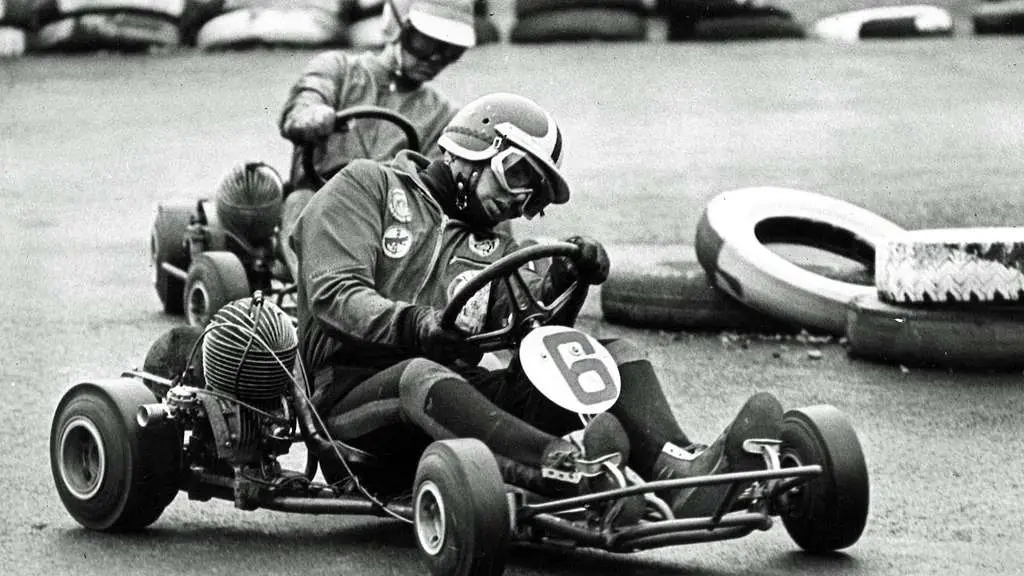
Going fast isn’t just fun — it’s good for you. The adrenaline rush sharpens your reflexes and floods your body with energy. Endorphins kick in, melting stress and leaving you grinning long after you’ve parked your kart.
It’s a workout for your body and your brain — boosting focus, confidence, and mood. It’s no wonder people walk off the track feeling taller than when they stepped on.
In the End, Speed is Human
So maybe our love of speed isn’t a modern addiction. Maybe it’s something ancient — a spark that’s been with us since the beginning.
Speed reminds us that we’re alive. It challenges us, focuses us, connects us. And whether you’re on the open road or the Overdrive track, that rush you feel isn’t just adrenaline.
It’s instinct.